

Towards a Commemoration of Matt Simpson
The sudden death of Matt Simpson has been a profound shock to many in the AMHP community across the country.
Matt was AMHP programme lead for Bournemouth University. He was also my predecessor as AMHP manager for Wiltshire Council, where he continued to act as duty AMHP, Friday after Friday, until two weeks or so ago. Even then, it was characteristic of Matt that he had been considerate enough to warn the current manager, Blair Percival, that he would not be able to attend that day.
Matt’s work, on what it means, legally and ethically, to ‘consider the patient’s case’ under s13(1) MHA, was far more than a PhD and the BJSW article listed at the bottom of this blog. It was rooted in many relationships in which much was achieved with quiet thought and few words. However, in withstanding pressure to detain people, particularly those whom he knew well, Matt could be passionate and persistent.

New Variant AMHPing – reflections on a pandemic.
I’d guess I’m not alone in going through a mountain of drafts when it comes to doing a piece for this blog. The problem I have is that the challenge I set myself was to do a piece around the experience of being an AMHP during a global pandemic. As I’m sure you will all appreciate, not an easy task!

“AMHP Number Two Please….”
AMHPs vary, not just in the decisions we take, but in how we learn, practice, cope with stress and distress: deal with the dysfunctional pressures of our very own theatre of the absurd.
We differ too in why we became AMHPs in the first place, and in what we now make of ourselves in the mirror of those preconceptions. If we dare search there at all.
Part of the challenge of that looking glass may be that the AMHP role is only just beginning to recognize you: your racialized identity; your resilience in facing domestic violence, harassment, persistent microaggressions; your traumas transformed; your hidden experiences, unspoken of at work, but which speak clearly in all you do.

The Critical AMHP is one-year-old!
We have reached our first birthday and it feels good! This time last year we were frantically putting the finishing touches not only to the initial four blogs but to the website itself to make sure it looked the part as well as read the part. We were all new to this type of project and it was a bit of a leap of faith. How would it land and where would it take us? We didn’t really know but we wanted to find out.
What we did know is that we had set out on this journey with the intention of creating ‘a forum for us to examine, celebrate and contest what motivates us and what holds us back in the work we do … [It was to be a] place where we can connect with our professional standards, with new ideas, and with each other in all our humanity and diversity … The Critical AMHP seeks to capture and learn from multiple, diverse voices’. A lofty aim perhaps, so now seems as good a time as any, at this first anniversary, to reflect on whether or not we have met this goal, whether we can go further and to think about new areas for these reflections.

“Call the Doctor…Quick!” Assessing Children under the Mental Health Act
When I receive a request to undertake an assessment on a child, the first thing I do is mentally run through the list of available Section 12 CAMHS doctors and start dialling them almost immediately (as the list is fairly short, it’s a pretty straightforward task!). Am I embracing this task with such enthusiasm because the Code of Practice says that I should? I can tell myself this (and others if they ask) but the truth of the matter is that assessing children and young people is often filled with so much complexity, dilemma, resource battles and uncertainty that I am filled with the overwhelming desire to have the “right people” at the “right time” in the “right place”. A task that is so much easier said than done.

‘Dilemmas, Conundrums, and Quagmires.’ Tracing the Threads of Ethical AMHP Practice
Inspired by Jon Mitchell's seminar on the 6th June this year and further buoyed by Robert Lewis’ impassioned comments towards the end of the talk, I have undertaken an informal review of the blog site considering the fundamental question that was posed during the seminar-‘What type of AMHP do you wish to be?’
In reviewing all twenty blogs published since September 2022, a number of threads or conceptual themes begin to emerge that may assist us in formulating something of an answer.

AMHP Practice – towards a language of deeds?
At the heart of this reflection is something to do with the ethical contradictions we tussle with as AMHPs and the effect of these on our decision-making. I pick out themes of power, the imposition of the state apparatus and legally informed duties creating issues of professional coercion and control for service users and AMHPs alike.

Tolerating Uncertainty
As a ‘rectification’ I’m sure we all have an assessment that stays with us. An experience that is omnipresent, pinballing through one’s mind. The assessment I consider in this piece I regularly think about due to the multiple dynamics and narratives intertwined into the assessment.

Is it really warranted?
Section 135 (s.135) is not my favourite section of the Mental Health Act 1983 (MHA). I don’t know any Approved Mental Health Professional (AMHP) who relishes the thought of executing a s.135 warrant. Quite the opposite. We do what we can to avoid such an oppressive use of power. Section 135 warrants must rank as one of the most challenging and testing sections of the MHA ethically, practically and emotionally. The coercive nature of the Act, and the power we wield, is perhaps at its starkest and clearest to AMHPs when we are walking up the path to someone’s house with the police in tow, warrant in hand. The effects for the person and their family can be devastating.

Out of Area Beds {OAPs & OATs}
Frustratingly in my both my professional and personal experience, it remains a little-known fact in wider society that it is Approved Mental Health Professionals who hold the legal power to detain a patient under The Mental Health Act 1983 (MHA).
Psychiatrists can recommend that a patient be admitted to hospital under The Act, but they do not have the legal authority to deprive a patient of their liberty. Interestingly, this legal myth can be perpetuated by psychiatrists themselves as was recently evidenced on the Radio Four series Is Psychiatry Working? when Dr Femi Oyebode spoke about detaining patients.

Mental Health Act Assessments: No trace of race. The Role of the AMHP in antiracist practice.
Mental Health Act (MHA) assessments are challenging. By their nature they indicate that some kind of crisis is occurring. Time is often limited in the MHA assessment interview. Questions put to the patient by the Approved Mental Health Professional tend to be restricted to those evidently pertinent to the decision regarding whether an admission is necessary.
Race is always present in encounters because we are now all racialised beings. The times when it potentially becomes most invisible are when all those present are white. The presence of anyone from a minoritized racialised group in any situation forces race to be visible.

AMHPersonality: Disordered?
I’m an AMHP who detains few people, and who tries to persuade others to use detention less too. Since the very identity of the AMHP seems to be that of a detainer this is quite a challenge. How far should you resist detention? What are the arts involved in doing so? How do you learn or teach them? Who do you become as this negative capability increases?

Compassion and empathy, or we are all “buggered”.
I was heartened recently to see an article in The Independent which highlighted the significant issue occurring in A&E departments across the country where people who require mental health assessment and possible admission under the Mental Health Act are left waiting for days and sometimes weeks without any legal safeguards (Thomas, 2022). As an AMHP, I was impressed that this issue had been covered by a national newspaper and highlighted the human rights issues for many people in mental health crisis who are left waiting in A&E

An AMHP Christmas miracle
I wanted to write about a story which will seem almost unbelievable to most AMHPs and others involved in mental health crisis support at the moment.
Just before Christmas I was on an AMHP shift and was called to do an assessment in A&E where a family had brought their relative due to their bizarre and agitated behaviour. This included the person repeating certain phrases, making threats to kill a close friend without any apparent reason that they could explain; they were highly restless, unable to sit still and had difficulties sleeping. I could see from the records and discussion with the crisis team that the person had experienced similar difficulties at other times in their life and hospital admissions under the Mental Health Act had been required on occasion.

Psychosis: A Quest For A New Tomorrow
Suddenly mid-afternoon, two psychiatrists and an AMHP were let into my flat saying that they had to assess me. They asked me a series of questions about my beliefs of grandiosity and paranoia. At the time, believing I was the next Einstein, and far more problematically, that there were dark forces operating around me I was deeply unsure who I could trust, or more precisely who the CIA (whom I saw as the enemy) had got to.

Noble calling or dirty work? - Anxiety in the AMHP role
I was midway through my AMHP training and was leading the assessment for one of my direct observations. I had been surprised to see the police arrive in a group of eight. I had, after all, done my own risk assessment. There was no suggestion Andy was a threat to professionals.
Critical!!!.......Who’s Critical? What’s Critical?
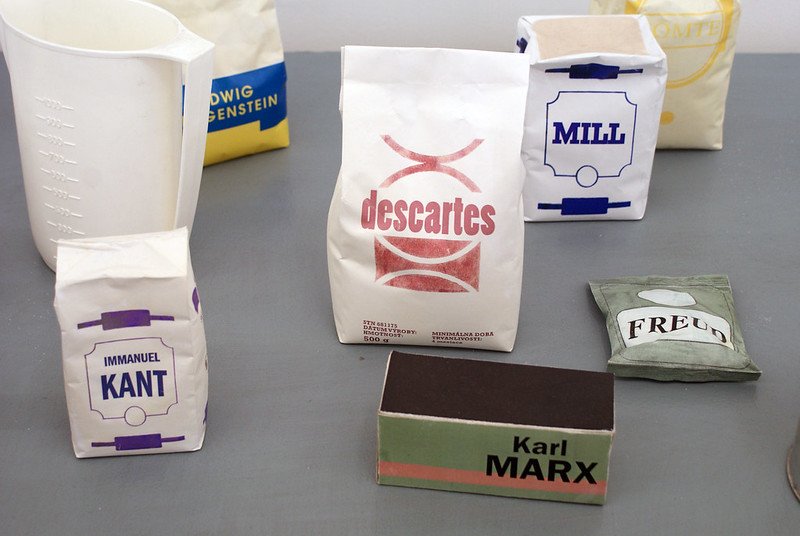
Take a momentary glance at social work, or the allied mental health professions, and you're likely to stumble across the requirement for practitioners to behave, practice and think critically. Critical reflection, critical analysis, critical perspectives, critical assessment, critical this and critical that.

Taking the Leap: Reflections of a newly qualified AMHP
I have worked as a social worker in Adult Mental Health services for the last six years and was approved as an Approved Mental Health Professional (AMHP) in March of this year. At the beginning of my training, I was slightly nervous as the whole process felt somewhat like a baptism of fire. Now I am really pleased I made the leap from social worker to AMHP and to be in a position where I have heightened abilities, skills, and knowledge to fully support my clients, team, and service. I feel the training has been particularly essential to working within mental health services and understanding the systems within which I work, including how my clients are supported.
The AMHP Report – who is it for?
Four years ago I took on a role developing a separate social care function within a Mental Health Trust.
As many of you will know, the framework of the Care Act 2014, encourages a focus on relationship and strengths-based conversations to help individuals' tell their story, identify their best hopes and the means by which they wish to achieve them. Care planning then involves exploring with the person what resources they have available and what else might be available to help them.

S136 assessments – one or two doctors?
In my AMHP Service, we almost always attend s136 assessments with two doctors. This is regardless of whether the person to be assessed is known or unknown. I can see how this approach developed and set in over time, likely out of a combination of expediency and defensive practice based on an assumption that having more assessors equals a more robust or comprehensive assessment. I think this practice (and the logic underpinning it) is problematic on a number of levels. My view is that routinely attending s136 assessments with two doctors is at best a frequent waste of resources, one which potentially negatively impacts the experience of the person being assessed. At worst, is it in essence an abuse of power?